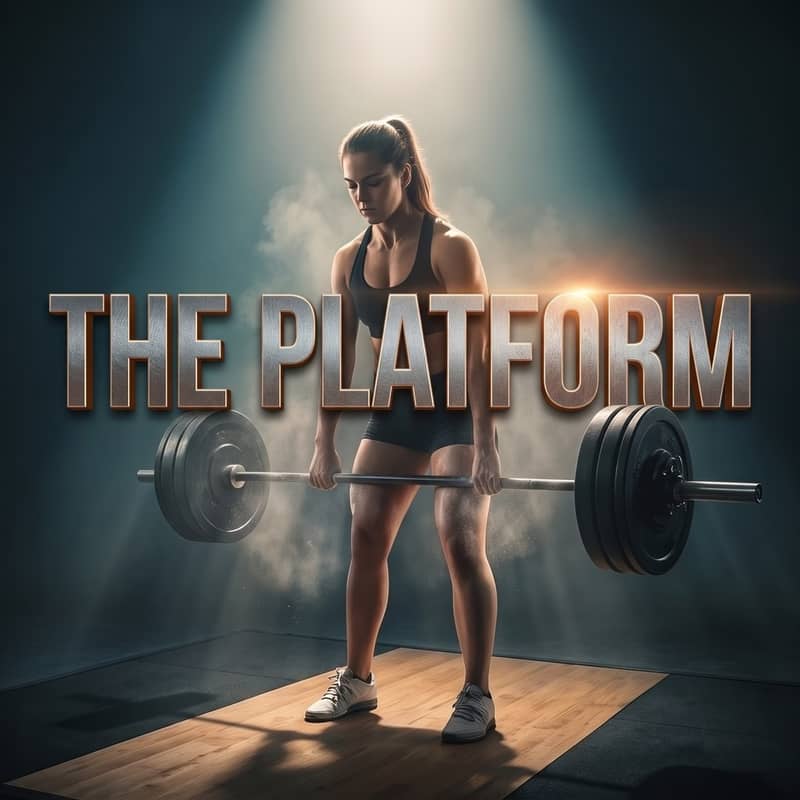
The Platform
Gym Workout for Strength, 3 Days a Week
On the platform, everything comes down to a single attempt: the bar, the weight and weeks of preparation behind it. “The Platform” prepares you for it three times a week: two heavy barbell lifts in every workout, followed by accessory exercises. Set aside three days and start with the intro week.
- GoalGain Strength
- LevelExperienced
- WhereGym
- Workouts36
- One workout~59 min
- ForEveryone
Who it’s for
- You are confident with the barbell in the squat, press and pull
- You want to lift more
- You can train in the gym three times a week
How it works
- 013 workouts a week, 6 exercises each; 15 sets a week for legs, 13 for back and 10 for chest
- 02Heavy lifts: two barbell lifts in every workout, first a squat or Romanian deadlift, then a bench press, bent-over barbell row or incline bench press; 5 sets of 5 reps in Base and of 4 in Build and Peak, 150 seconds of rest
- 03Accessory exercises: 2 sets each, the weighted ones for 10 reps in Base and 8 in Build and Peak, 120 seconds of rest
- 04Three 4-week stages: in Base the load rises week by week, in Build it moves in a wave with a step back in week 3, in Peak it drops in week 4
Stage-based strength periodization
The heavy lifts come at the start of the workout, before fatigue from the accessory exercises sets in. Peak has fewer reps than Base and a higher average weekly weight, and the load drops in week 4. Your maxes carry over from stage to stage, and a new round of Base starts from the weights you have reached.
Weekly volume
Counts sets where the muscle is the main target of the exercise
- Back13 sets3 workouts
- Chest10 sets2 workouts
- Quads10 sets2 workouts
- Arms6 sets3 workouts
- Abs6 sets3 workouts
- Hamstrings & glutes5 sets1 workout
- Shoulders4 sets2 workouts
Weighted sets end at least 1 rep short of failure
What the research shows
4Programs that vary the load from period to period raise max strength more than programs with a flat load
Williams et al., 2017Varying the load from period to period adds to max strength and has no effect on muscle growth
Moesgaard et al., 2022Strength grows more with more sets per week
Ralston et al., 2017Frequency affects strength through volume: with volume equal, the difference is small
Grgic et al., 2018
Workout A
6 exercises · ~59 minThe whole first workout. Tap an exercise to open its technique with photos and video.
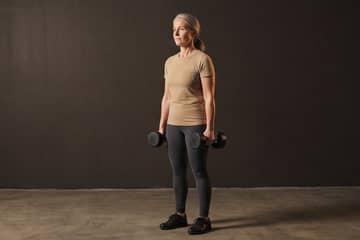
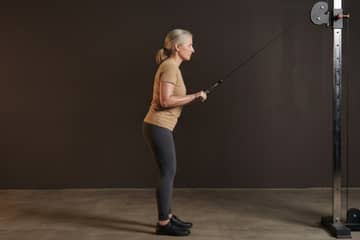

All workouts in the program
36 sessions over ~11 weeks, 3–4 per week. Workouts A, B and C repeat in a loop, 12 times each. The other workouts and the weight for every set are in the app.
Workout intensity
The load of each session: higher means harder. average per round A–C
Workout number
Program weights — from your 1RM
1RM is the weight you can lift once. Enter it for the base exercises and AtletIQ will calculate working weights for all 36 workouts of “The Platform”.
- The weight of every set comes from your 1RM
- All workouts of the program in order, with rest between sets
- Progress for every exercise
| Workout | Weight | Sets × reps |
|---|---|---|
| 1 | 35.5 kg | 3 × 10 |
| 2 | 40 kg | 3 × 8 |
| 3 | 33 kg | 4 × 12 |