
Tower House
Three workouts a week, each with a heavy strength exercise and exercises for muscle growth
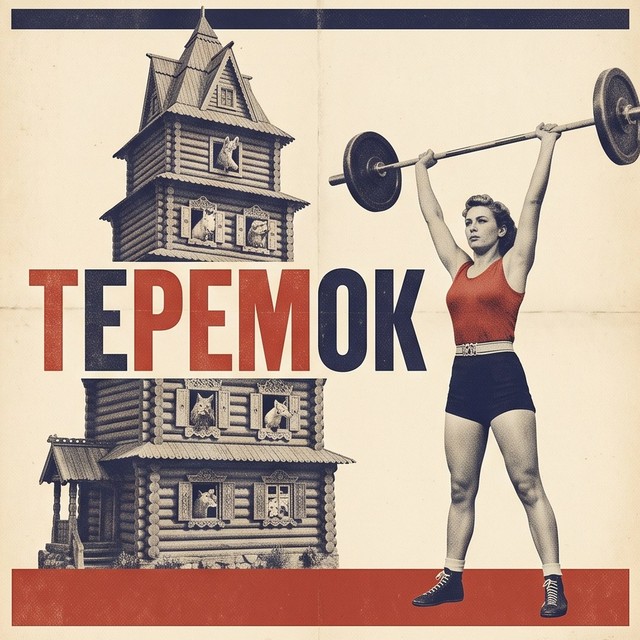
For beginners who want to get stronger and build muscle at the same time. 3 workouts a week, 6 exercises each, and every workout trains legs, chest and back. Two 4-week stages: Base and Build. Bodyweight abs are done for 15 reps in both stages. Rest between sets is 2 minutes on the heavy exercise, presses, rows and pulldowns, and 75 seconds on everything else. In Base the load rises week by week; in Build week 3 is lighter than week 2. The next step after this program is “Traffic Light”.
For the first 4 weeks there is no barbell in the program: the heavy exercise in each workout is done on a machine, the rest on machines or with dumbbells. A machine guides the movement along a set path, so the technique is easier to learn. From week 5 the heavy exercise is done with a barbell; the other exercises do not change. The heavy exercise uses 3 sets of 5 reps in Base and 4 sets of 4 in Build. Isolation exercises use 2 sets: 15 reps in Base, 13 in Build. The other weighted exercises also use 2 sets: 12 reps in Base and 10 in Build. The app calculates the weight for each set. The first week is the lightest. A set ends when you could still do 2 or more reps.
Method: Tiered scheme.
Low reps build strength, higher-rep work adds the volume muscles need to grow, and three tiers combine both in one workout. The heavy exercise uses 3 sets of 5 reps on a machine in Base and 4 sets of 4 with a barbell in Build. The other exercises use 2 sets: weighted ones 12 reps, then 10; isolation exercises 15, then 13.
What studies found:
- With equal volume the strength scheme gave more strength; muscle growth was the same (Schoenfeld et al., 2014)
- Low reps build strength, high-rep work builds muscular endurance (Campos et al., 2002)
- Muscle growth does not depend on the weight; max strength grows more with heavy weight (Lopez et al., 2021)
The studies tested strength and high-rep schemes separately; three tiers in one workout have not been tested.